
Top search terms
Stability of Saggars for Sintering Lithium-ion Battery Cathode Materials: From Basic Usability to Long-term Reliable Cyclic Performance
2026-07-11
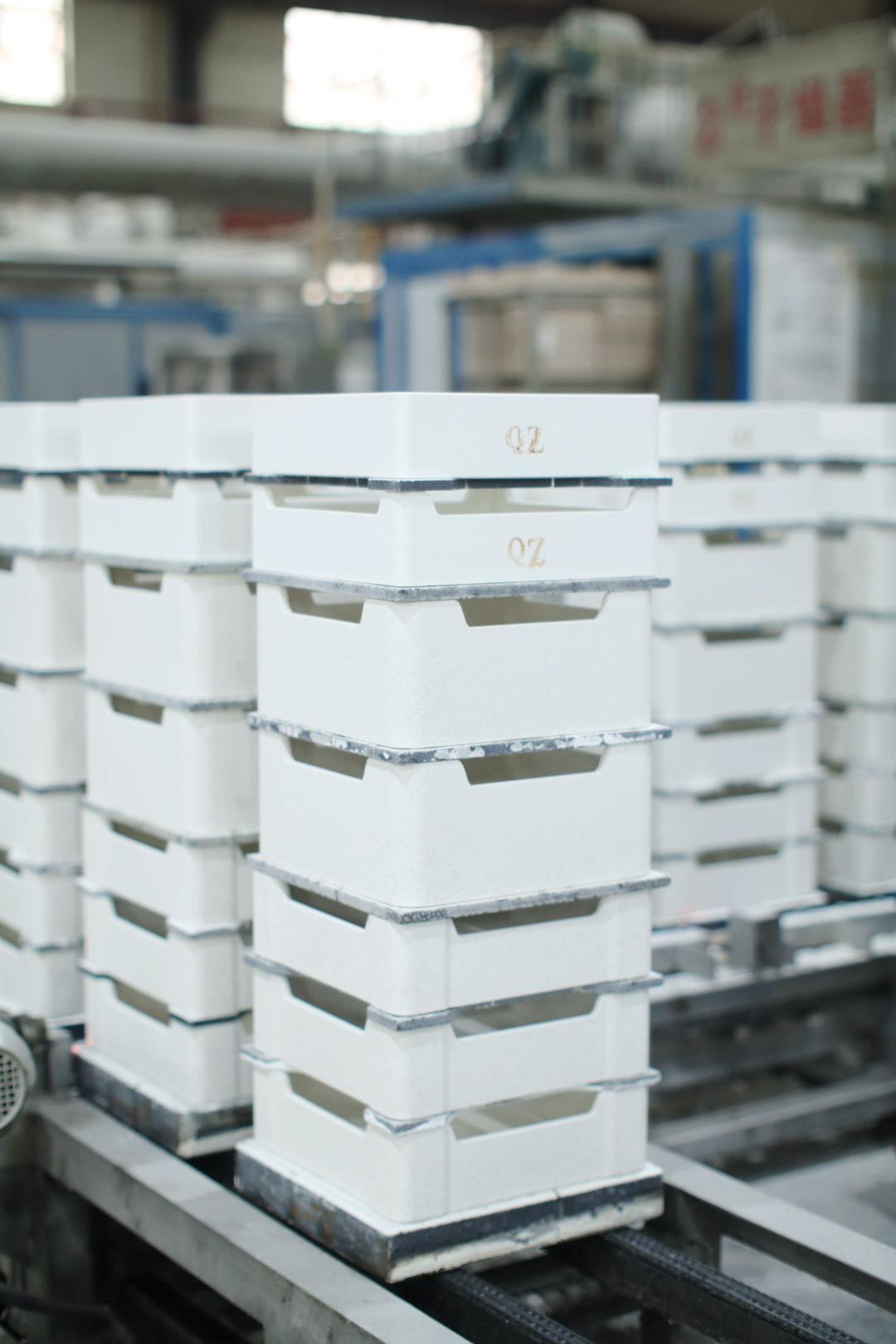
High-temperature sintering of lithium-ion battery cathode materials constitutes a core and critical process in lithium battery manufacturing. As functional components that hold cathode powder and withstand repeated high-temperature cycling, saggars are valued not by whether they can be used for a single run, but by their structural stability, consistent performance and long service life under frequent thermal cycling conditions. In practical industrial applications, saggar failure rarely occurs abruptly; instead, it is a gradual degradation driven by the combined effects of long-term thermal stress fatigue and chemical corrosion. The upper limit of cyclic service life directly determines production line maintenance costs and continuous operational stability.
I. Core Failure Mechanisms of Saggars under Actual Operating Conditions
Sintering kilns for lithium-ion batteries operate continuously and cyclically. Saggars are exposed to sustained high temperatures around 1000 ℃, undergoing drastic thermal cycles of heating, soaking and rapid cooling, together with corrosive volatiles released from cathode powders at elevated temperatures. This creates a dual failure mechanism combining thermal stress damage and chemical corrosion. The degradation process is detailed as follows:
- Accumulated thermal cycling stress triggers structural fatigue cracking Refractory materials for saggars consist of aggregate particles, fine matrix powder and trace impurity phases, each with inherent differences in thermal expansion coefficients. Frequent alternations between high and low temperatures cause uneven thermal expansion and contraction across micro-regions inside the material, generating alternating thermal stress that builds up continuously. Meanwhile, under prolonged high-temperature service, mullite crystalline phases within the saggar matrix experience lattice parameter shifts and grain boundary relaxation, while low-temperature glassy phases in the matrix tend to soften, crystallize and undergo phase transformation at high temperatures. These multiple microstructural changes first induce microcracks inside the material and at transition zones. As thermal cycles increase, microcracks propagate and interconnect, eventually forming penetrating cracks, deformation and fractures. This leads to discontinuous spalling and overall structural failure, rendering the saggar unfit for production.
- High-temperature chemical corrosion and spalling induced by cathode volatiles Mainstream cathode materials including high-nickel ternary, lithium cobalt oxide and lithium iron phosphate continuously release active volatile components during high-temperature sintering, mainly lithium oxide, lithium fluoride and other alkaline active substances; weak acidic species also exist in the high-temperature atmosphere. These high-temperature active components feature strong permeability. They penetrate the matrix through open surface pores and microcracks of saggars, triggering sustained acid-base reactions and melting corrosion with primary crystalline phases such as mullite and alumina, as well as glassy phases. Long-term corrosion forms a loose deteriorated layer on the saggar surface, gradually causing pulverization, sanding, spalling and pitting. These issues drastically shorten saggar service life. Worse still, detached powder contaminants may pollute cathode materials, impair battery performance and trigger quality fluctuations on production lines.
II. Systematic Engineering Solutions
Most conventional saggar improvements in the industry only target single physical indicators, such as simply boosting room-temperature mechanical strength or increasing lab-scale thermal cycling times. Such measures fail to adapt to complex on-site sintering conditions and cannot fundamentally resolve long-term degradation. Abandoning the mindset of optimizing isolated indicators, Hunan Jinkai develops an all-round systematic optimization scheme covering material systems, microstructures and operating condition adaptation based on failure mechanisms, enabling long-term stable operation of saggars.
- Precise control of raw material systems to stabilize high-temperature crystalline structures High-purity, low-impurity raw materials are selected, and the mullite-alumina composite primary crystalline phase system is proportioned accurately. Strict control over raw material particle size, purity and mixing ratio suppresses high-temperature crystal distortion, lattice shift and abnormal phase transformation at the source. Stabilizing the primary crystalline skeleton greatly enhances the high-temperature structural stability of saggars, lowers risks of microstructural degradation during thermal cycling, and lays a solid foundation for long-term service.
- Homogenized formula regulation to reduce dispersion of thermal expansion Formulations of matrix phases and composite additive systems are optimized to balance thermal expansion coefficients of each phase, significantly narrowing disparities in thermal expansion and contraction across different micro-regions. This enables uniform and controllable thermal stress response during repeated thermal cycles, eliminates localized stress concentration, restrains the initiation and propagation of microcracks fundamentally, and improves overall thermal shock resistance and anti-fatigue performance.
- Optimized sintering processes to boost matrix density and impermeability Fine-tuning firing temperature, soaking profiles, heating rates and other production parameters optimizes the internal pore structure of saggars. The volume of open pores is greatly reduced and closed pores refined, forming a dense surface protective layer. This effectively blocks penetration channels for active cathode volatiles, isolates high-temperature corrosive media from the matrix, slows surface erosion, pulverization and spalling, and strengthens chemical corrosion resistance.
- Comprehensive adaptation to actual kiln operating conditions Standardized universal designs are discarded. Centered on customers’ on-site conditions, key parameters including kiln temperature distribution, heating/cooling rates, soaking duration, single-layer material thickness, kiln atmosphere and cycling rhythm are taken into account. Targeted adjustments are made to saggar wall thickness, corner structures, overall curvature and load-bearing structures to match on-site temperature gradients and stress distribution, preventing premature failure caused by insufficient condition adaptability.
III. Core Technical Logic of Hunan Jinkai: Precise Matching with Full-Scale Operating Conditions
A prevalent industry misconception is overemphasizing laboratory indicators while neglecting on-site adaptability. High strength and thermal shock resistance measured in lab tests do not equal long service life on production lines. The core technical advantage of Hunan Jinkai lies in a reverse design logic oriented toward customers’ actual operating conditions, aligning saggar performance with real production scenarios: First, collect full sets of key production parameters, including cathode material system, sintering profile, kiln temperature zone characteristics, powder volatilization behavior and production line cycling frequency. Second, customize saggar formula systems based on operating data, optimize ratios between primary crystalline phases and matrix phases, upgrade bonding systems, and iterate structural design and forming processes for saggars. Third, precise condition matching maintains high consistency in microstructures and mechanical properties of saggars during long-term continuous production, establishing predictable, stable and long-term failure thresholds and tackling the industry-wide pain point of irregular premature saggar failure.
Ultimately, the core competitiveness of saggars does not rest on extreme single laboratory indicators, but on the ability to sustain structural integrity and stable performance under combined conditions of high temperature, corrosion and alternating thermal cycling.
IV. Conclusion
Saggar failure during lithium battery sintering results from the combined action of thermal stress fatigue cracking and high-temperature chemical corrosion. Optimization of a single property cannot deliver long-term reliable operation. To break through service life bottlenecks and stabilize production, the fundamental approach is to move beyond the single-indicator optimization mindset and adopt systematic design tailored to actual operating conditions.
Leveraging its mature condition-matching technical logic and starting from failure mechanisms, Hunan Jinkai delivers comprehensive customized optimization covering material formulations, microstructures, process parameters and structural design. Saggars are precisely adapted to different customers’ cathode material systems and kiln conditions, effectively extending cyclic service life, cutting consumable replacement costs and production downtime, mitigating quality fluctuations caused by impurity contamination, and providing core support for efficient, low-cost and stable production on lithium-ion cathode sintering lines.